Summer is here! Be sure to water your trees when the temps get hot and there hasn't been rain in a while. Sufficient watering is the best way to protect trees from stress that can lead to more serious insect or fungal diseases.
Long deep soakings in the mornings or evenings reduce water loss to evaporation. Placing mulch around the base of the tree in a "doughnut" shape can also help retain soil moisture. Smaller trees planted in the past year need 5-10 gallons of water every 2-3 days during extreme heat. Larger mature trees need a deep soak of the top 6-8 inches of soil once a week.
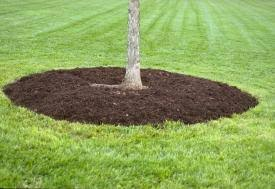
Photo: An example of proper “doughnut” mulching on a tree. Allowing for moisture retention in the root zone without harming the trunk of the tree.
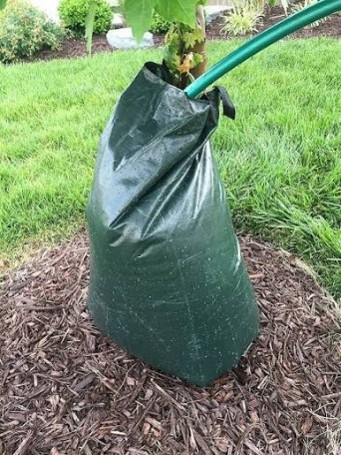
Photo: Tree watering bags slowly release water over 6-10 hours and can hold up to 20 gallons of water.
For more info on tree irrigation, check these links from the Minnesota DNR and the University of Minnesota Extension. Or contact Balin Magee, Restoration Technician, at This email address is being protected from spambots. You need JavaScript enabled to view it. .
373 Hits