The Recovery of the Wild Turkey Population in Minnesota

Wild Turkey - MN DNR

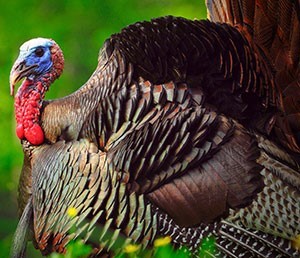
Did you know that wild turkey had gone from a native population of millions of birds to being almost extirpated by 1900 in the United States?

The restoration of the American wild turkey is one of the greatest wildlife conservation success stories.

That success story began in 1973 in Minnesota. The MN DNR traded a flock of its homegrown ruffed grouse for 29 turkeys from Missouri. The Missouri-born birds were released in Houston County in southeastern Minnesota and the population grew rapidly. Many partnering turkey advocates aided in their return, including members of the National Wild Turkey Federation who helped transport the flocks to new habitats. The restoration of the wild turkey over the past 25 years is one of Minnesota's greatest conservation success stories. Once rare, today wild turkeys are becoming a common sight throughout southern and western and even central Minnesota.

Wild Turkeys live year-round in open forests with interspersed clearings. They nest on the ground in dead leaves at the bases of trees, under brush piles or thick shrubbery, or occasionally in open fields. Wild turkeys are omnivorous, and their diet changes by the season: in spring and summer, they eat insects, seeds, and leafy vegetation; in fall and winter, they eat tree nuts, seeds, and berries. They will also eat small amphibians and reptiles. Poults, young turkeys, feed heavily on insects.

The Anoka Conservation District with funds from the Outdoor Heritage Foundation and National Wild Turkey Foundation is enhancing turkey habitat at the Robert and Marilyn Burman WMA and Gordie Mikkelson WMA. Tree thinning and buckthorn removal will open the forest and promote oak regeneration. Acorns are a favorite fall food. Increased native plant diversity in the woodlands, savanna, and prairies will attract a diversity of insects, providing a high protein food source.

Give thanks to the many conservationists who worked to restore wild turkey populations and their habitat. 

  7065 Hits
Tags:

Buckthorn ID and Control

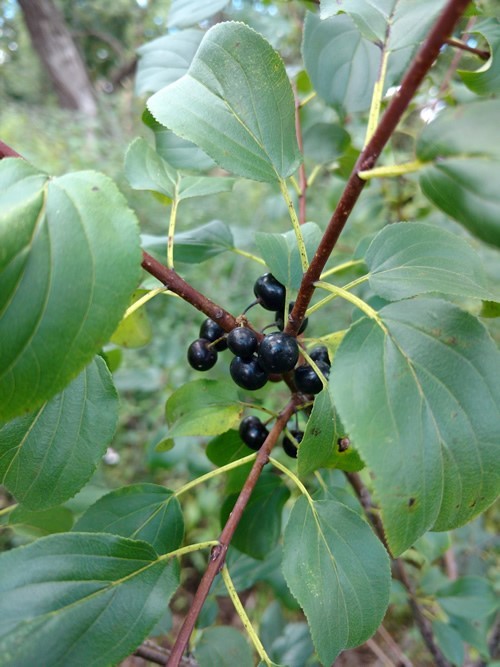
Late September through the end of October is a good time to inventory common buckthorn on your property. Common buckthorn leaves remain green longer than most Minnesota native trees and shrubs so they will stand out when other trees and shrubs are changing color and dropping leaves.

Common buckthorn (Rhamnus cathartica) can be found in upland forests. Look for the thorn, which can be found at the end of some branches.

Glossy buckthorn (Frangula alnus) can invade wetlands. There are no thorns. Look for the rust colored terminal bud.

See the buckthorn fact sheet for tips to identify buckthorn, learn about native look-alikes, and find methods for controlling buckthorn.

For a safe way to treat buckthorn stumps, you can apply herbicide with buckthorn blasters/dobbers: https://landscape-restoration.com/

See the DNR's buckthorn management page for more information.

  4612 Hits

Prevent the Spread of Invasive Species

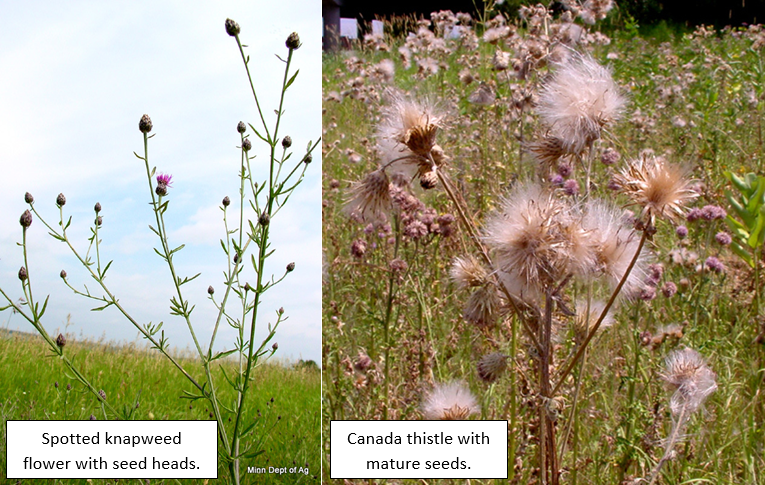
Many invasive species are now beginning to develop mature seed. Here are some ways you can do your part to prevent spreading their seed:

  • Avoid mowing invasive species with seed. Seed will travel with the mower and likely remain on the mower to be spread into new areas.
  • Beware of seeds found on your boots or clothing. They may be in the mud between your boot treads or attached to your clothes like Velcro. Use a boot brush to clean your boots and check for seeds on your clothing.
  • Seeds may also attached to treads on bikes, ATV, and stroller tires. Spray down tires to remove mud and plant parts.


Invasive plants can harm ecosystems and choke out beneficial native plants. Always be vigilant to prevent the spread of invasive species!

  3709 Hits

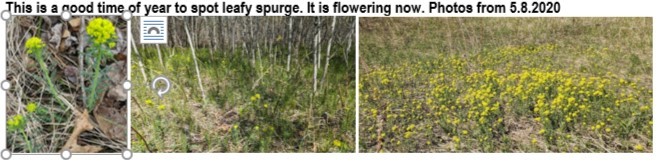
Spurge Euphorbia esula MN Noxious Weed: Prohibited – Control

  • 1-2 foot tall
  • Greenish-yellow flower bracts
  • Simple and opposite leaves
  • A white, milky sap exudes if the stem or leaves are cut
  • Grows in full to part sun in range of soil types and moisture

If you see leafy spurge, please report it on EDDMaps: www.eddmaps.org/

For more information and control methods see:

https://www.dnr.state.mn.us/invasives/terrestrialplants/herbaceous/leafyspurge.html

https://www.mda.state.mn.us/plants/pestmanagement/weedcontrol/noxiouslist/leafyspurge

Biological control is an option for reducing large infestations of leafy spurge. Adult leafy spurge beetles (Aphthona lacertosa) feed on the leaves and lay eggs at the base of spurge plants. Larvae feed on the roots over the winter until they pupate and emerge as adults the following summer. See: https://www.mda.state.mn.us/plants/pestmanagement/weedcontrol/noxiouslist/leafyspurge/leafyspurge

Photo at Anoka Nature Preserve. 7.3.2019
  3482 Hits

Sheet Mulching

Sheet mulching – saves time, builds soil, and smothers existing weeds or lawn without using herbicide.

Sheet mulching is an excellent way to convert lawn to garden beds without using herbicides or excessive labor. Meanwhile it can build soil and be accomplished with readily available materials.

Begin by mowing grass or other vegetation in the area you want to convert into a new garden bed. It can be as simple as layers of newspaper or cardboard topped by four inches of mulch to smother grass and weeds underneath. If this is started in the spring, the underlying plants will have died from lack of light and the garden bed will be ready for planting in the fall.A more diverse layering of material will produce a compost that will break down and build your soil. For this, layer:

  1. Soil amendments if soil test results recommend amendments (lime, greensand, etc.). Recommended if you are creating a vegetable garden.
  2. Thin layer of compost.
  3. Wet newspaper or cardboard, 1/4 – 1/2 inch thick.
  4. Thin layer of nitrogen source such as manure.
  5. Layer of straw or leaves (carbon source).
  6. Continue to alternate layers of nitrogen and carbon sources.
  7. End with a top layer of mulch.

This type of bed is finished when these layers have decomposed. It may take the entire growing season to decompose sufficiently. If you start in the spring, the bed will likely be ready to plant in the fall.

See the Xerces Society Organic Site Preparation for Wildflower Establishment publication for more organic site preparation methods and directions:

https://xerces.org/publications/guidelines/organic-site-preparation-for-wildflower-establishment

  4779 Hits