MNDNR Evaluates Cedar Revetments in Anoka County 

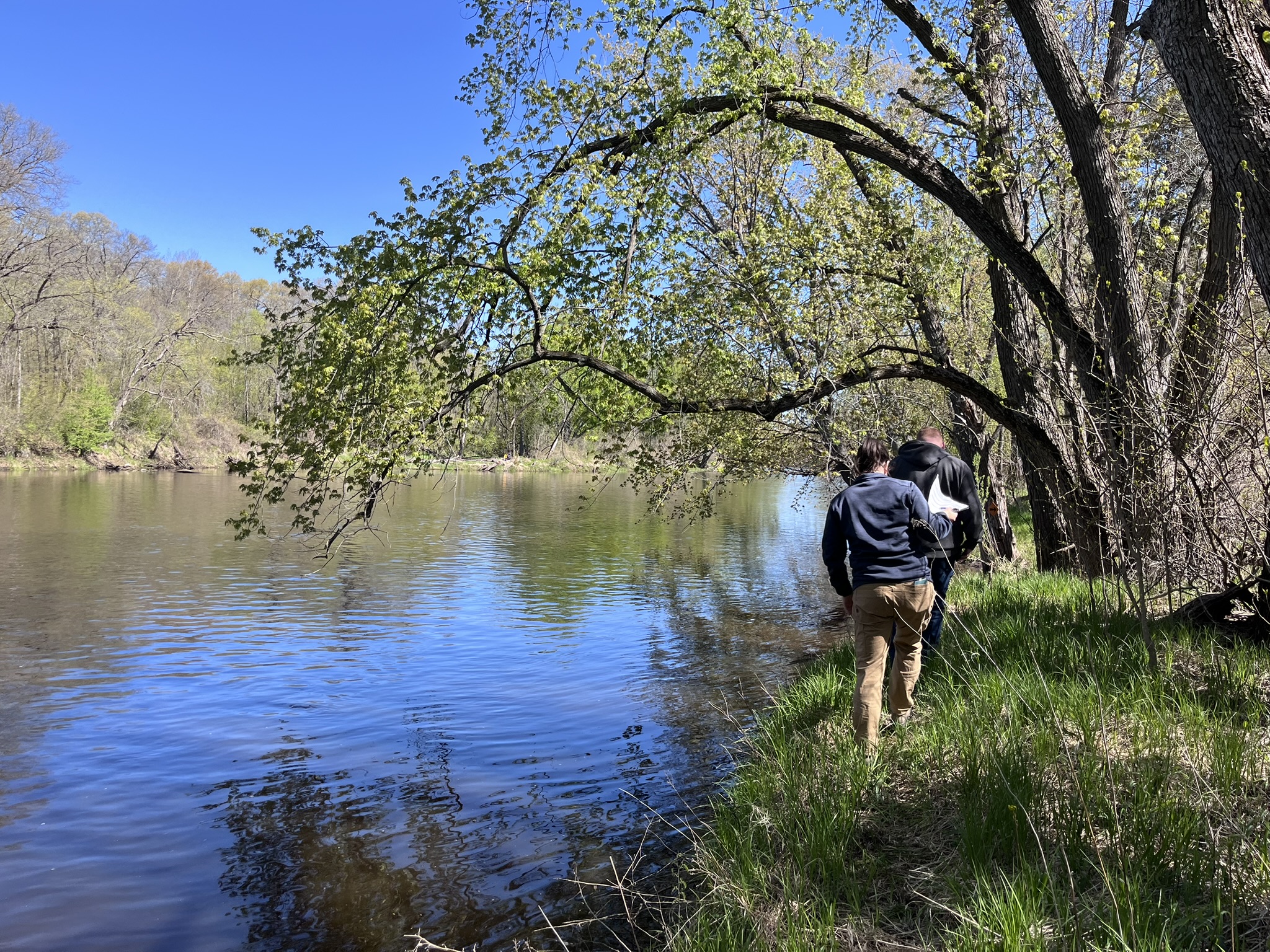
Photo: Anoka County Parks Manager, Quinn Palar, and CPL Program Administrator, Amy Yoelin, walking on top of a Rum Riverbank in Anoka County.

The Rum River has over 7 miles of shoreline with some degree of erosion. Riverbank stabilization practices protect property, enhance shoreline habitat, and improve downstream fisheries by improving water clarity and protecting spawning areas. Cedar tree revetments are among the most cost-effective means of addressing moderate riverbank erosion before it worsens.

Anoka County Parks was awarded a Conservation Partners Legacy grant to install 2,500 feet of cedar revetment on eroding sections of the Rum River. ACD was contracted by Anoka County Parks and completed this work between 2023 and 2025. ACD overdelivered by installing 2,933 feet of revetment within available funds.

Cedar tree revetments use Eastern red cedar trees anchored along an eroding riverbank to slow the current. This decreases erosion and allows silt and sand to deposit. The deposited material forms a seedbed. By the time the cedar trees have decayed, the bank is stabilized by the roots of the living trees. 
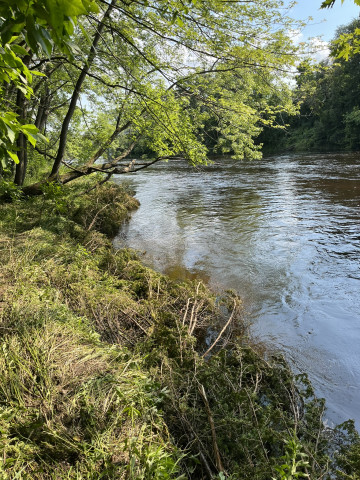
Photo: A cedar revetment installed on the Rum Riverbank to slow the current and reduce erosion.

The MNDNR was excited about what they saw and encouraged Anoka County Parks to continue their revetment program, which is now in its 3rd phase. With the support from the state, Anoka County Parks will likely apply for another phase of funding this coming August.

Restoring streambanks and establishing habitat along public riverbanks will benefit the thousands of Anoka County residents who frequent local parks, as well as Rum River enthusiasts each year. For more information, contact Kris Larson, Water Resource Specialist, at This email address is being protected from spambots. You need JavaScript enabled to view it.

  86 Hits

Prescribed Burns in Anoka County Parks

Each year, the Anoka County Parks Department uses prescribed burns to manage ~200 acres of prairie and savanna habitats. Fire is a natural part of these ecosystems; it removes accumulated plant material, releases beneficial nutrients, fights the encroachment of woody plants, and helps control invasive species. Through these processes, fire boosts the native plant community and increases diversity. Prescribed burns are often paired with other management techniques such as mowing, applying selective herbicides, and supplemental seeding. 

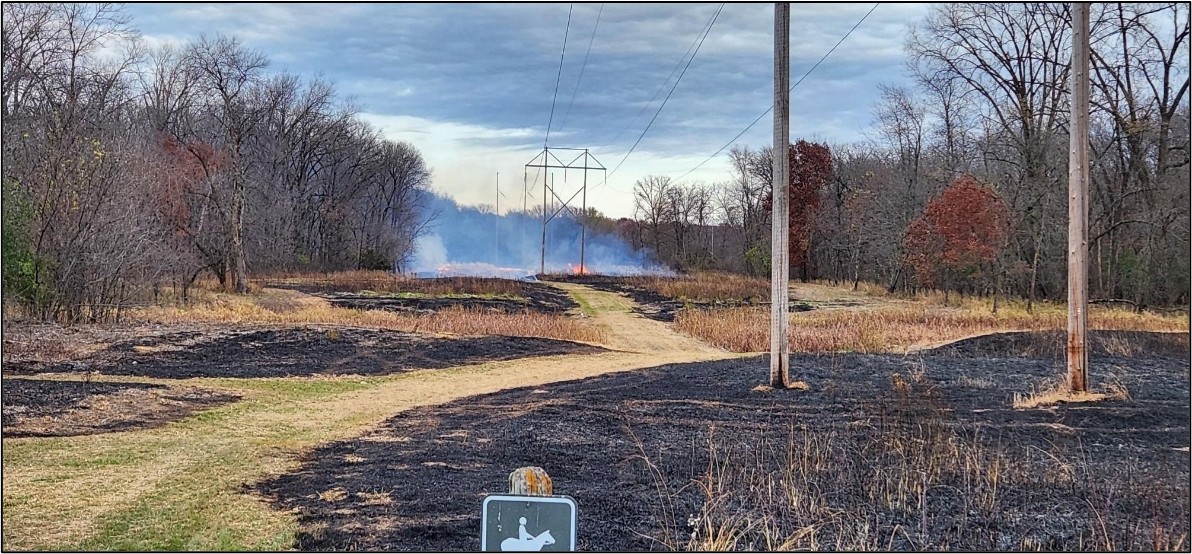
Photo: ACD staff observed this prescribed burn taking place at Rum River Central Regional Park.

Powerline corridors like this need to remain clear of woody vegetation, providing an opportunity for active prairie management in its place. This restoration also involved treating smooth brome (an aggressive invasive grass) before burning. Visit the U.S. Forest Service webpage to learn more about prescribed burns or contact Carrie Taylor, Restoration Ecologist, at This email address is being protected from spambots. You need JavaScript enabled to view it..

  828 Hits

ACD Receives Aquatic Invasive Species Behavior Change Grant through DNR

Anoka Conservation District, in partnership with Anoka County Parks, received a MNDNR behavior change grant in the amount of $4,992.74 to pilot a strategy to reduce the spread of aquatic invasive species. The pilot behavior change intervention strategy will be delivered to the target audience of boaters and anglers through the installation of new boat cleaning equipment at 5 high traffic boat launches and education provided by on-site AIS inspectors. The project will influence positive behavior change in boaters and anglers by removing barriers such as lack of access to tools/equipment for properly cleaning boats/trailers, lack of space to clean boat or pressure caused by high-traffic boat launches, and lack of knowledge of how to use cleaning tools/equipment. We will lay the groundwork by conducting research on baseline boater behavior this summer, install the weed removal stations in spring of 2021, and collect observational data on weed removal station use and commitments to use the stations from boaters throughout the 2021 boating season. The results of the pilot study will be used by the DNR in future AIS behavior change strategies throughout the state.

  4193 Hits

Rum River Central Regional Park Riverbank Stabilization

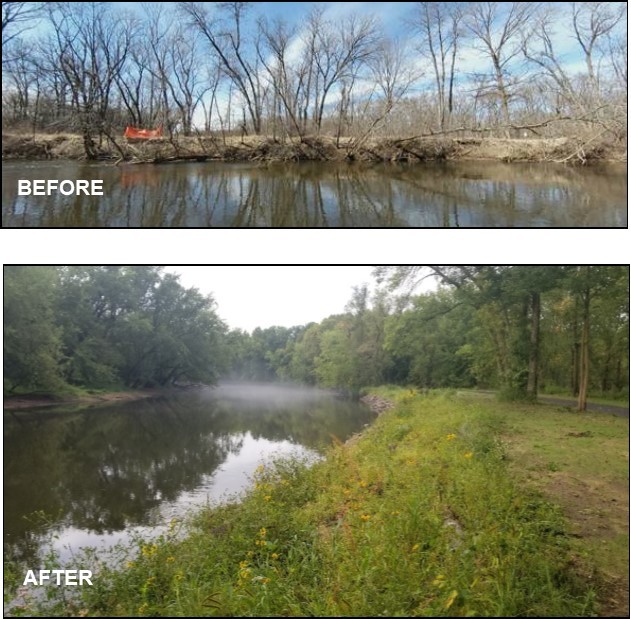
The Anoka Conservation District partnered with Anoka County Parks to stabilize 310' of eroding riverbank within Rum River Central Regional Park. Prior to the project, the bank was severely eroding and undermining sections of a paved trail. The stabilization project is now complete and included the following elements:

  • Minimal riprap at the bottom of the slope within the zone of frequent water level fluctuation where vegetation does not grow well,
  • Grading above the riprap to the top of the slope (3H:1V), seeding with native vegetation, and installation of an erosion control blanket,
  • Relocation of the paved trail to ensure sufficient separation between the trail and the new top of slope, and
  • Dormant willow stakes were installed in November 2019 as the final phase of the project.

Stabilization of the bank will prevent 100 tons of sediment annually from entering the Rum River. Multiple State and local funding sources were used to complete the project.

  4682 Hits