Teaching Students about Natural Resources during a Pandemic

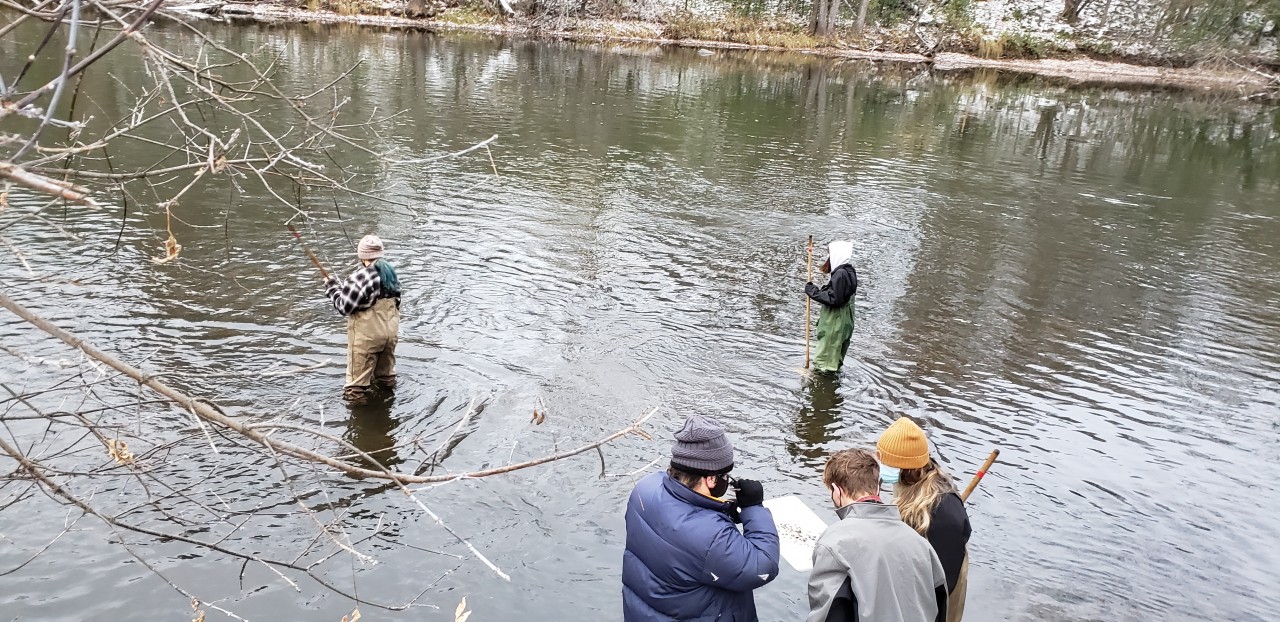
One activity that ACD does every year is take local high school students to streams near their schools to collect macroinvertebrates. Many of these organisms are the larval forms of many of our common insects. Think mosquitoes, mayflies, black flies, and dragon flies. Assessing the community of invertebrates living in a stream over time can give us a good indication of how healthy that stream is (i.e. how good the water quality is). This is because the different types of these invertebrates have varying levels of tolerance to polluted water. Some can only live in very clean water, while others can survive in very polluted water.

This exciting lesson combines a field trip to a stream and the opportunity to play in the water, with a lesson about the natural world and how we can use the biotic organisms living in those streams to monitor their health over time. In the midst of the COVID-19 pandemic, we had to think outside of the box to make this fun and important lesson happen in 2020. In the spring of 2020, we were not able to do this lesson with any schools, because all of them were full time distance learning, and we had never prepared a distance learning lesson before. This fall however, we got a little more creative.

I made a virtual lesson via Go Pro video with a teacher from the Forest Lake Area Learning Center and his sons. With Totino Grace and St. Francis High School students, we worked in small groups in the field with masks on, disinfecting all equipment between classes. We also had classes attend virtually while a teacher held the live feed camera up and talked to the students that were attending online. Overall, whether by recording, live video stream, or in person at the river respecting social distancing and mask wearing, just about 200 kids still got to take part in this activity from the three schools mentioned. It took a little more time and effort than usual, but in the end we made sure a large number of local students still got the opportunity to take part. 

  2362 Hits

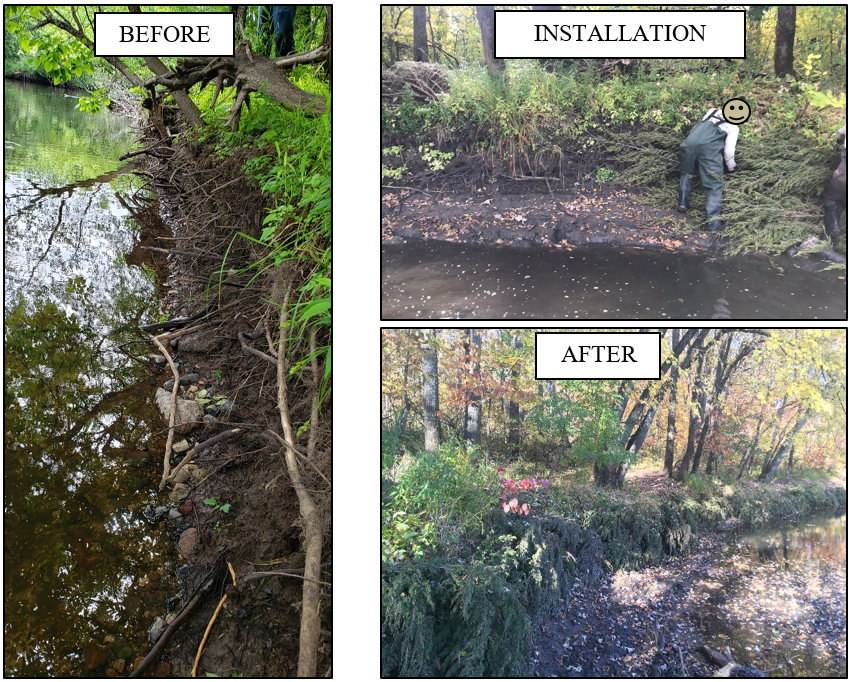
Cedar Tree Revetment at Rum River Central Regional Park

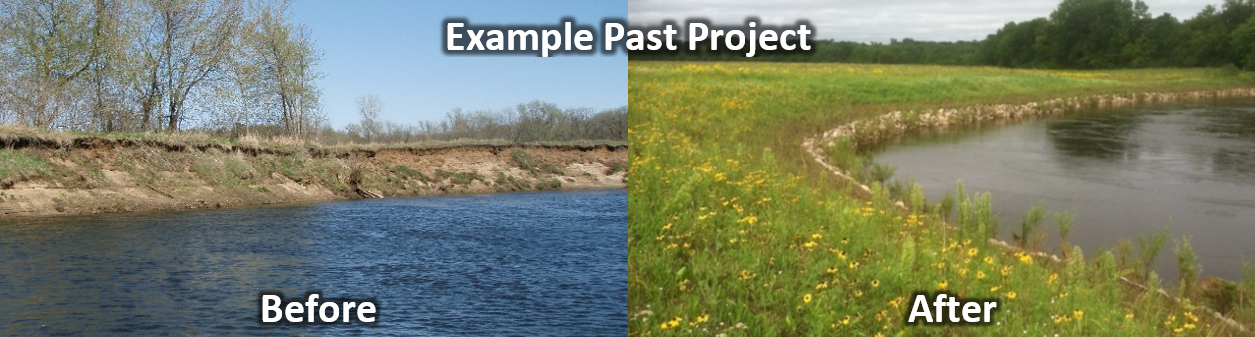
ACD installed approximately 650 linear feet of cedar tree revetment at Rum River Central Regional Park this past month. This type of project prevents erosion of shorter river banks using cut eastern red cedar trees anchored along the toe of the bank in a shingled fashion. The thick branches of the eastern red cedars dissipate the erosive energy of the water as it washes along the streambank on the outside bend of a river. In this particular area at the park, a walking trail was at risk of washing out soon if the erosive scour continued unchecked. In addition to protecting the walking trail, this project will keep about 30 tons of sediment out of the river every year!

In order to accomplish this feat, we relied on numerous partnerships. Anoka County Parks helped us by purchasing the cable and earth anchors, as well as providing tree hauling services. Sherburne County donated 130 eastern red cedar trees from county-owned property. And finally, a large portion of the labor involved was done by a Conservation Corps. MN & IA crew that worked on this project for 12 ten-hour days. Thank you to all of these partners! 

  3469 Hits

Three New Rain Gardens in Anoka Help Rum River Water Quality

ACD partnered with the City of Anoka to design three rain gardens that were installed as part of a City street reconstruction project in the 38th Lane neighborhood. Construction wrapped up this month in the yards of three homeowners who volunteered to take on the ownership and maintenance of these great water quality features. These three new rain gardens join two others that were installed in 2017 to clean up stormwater from this neighborhood that otherwise would wash directly to the Rum River via the storm sewer system. In total the three new rain gardens will treat about five acres of drainage area and remove about 1,164 lbs of total suspended solids (TSS) and 3.6 lbs of phosphorus annually from the stormwater runoff originating from those five acres. This results in about a 75% reduction in pollution washing to the river from this area!

Once the new plants have a chance to grow and bloom in these gardens in the coming years, not only will these rain gardens continue to provide an important water quality benefit to the Rum River, they will also host numerous pollinator species throughout the year with their abundant native flowering plants! ACD would like to extend a big thank you to the five landowners in this neighborhood, and dozens elsewhere in the county, that are willing to sacrifice portions of their yard to improve water quality in important waterways like the Rum River. These partnerships with willing private landowners are vital to ensuring clean and clear water for all to enjoy. 

  3127 Hits

Don't Feed the Deer!

In recent years the Minnesota DNR has been tracking the spread of Chronic Wasting Disease in Minnesota deer. Chronic Wasting Disease (or CWD) is a neurological degenerative disease that causes the brains of deer (and other cervids) to deteriorate and become spongy. It ultimately leads to the death of the infected animal. While a direct link to human infection by CWD through contact with or consumption of infected deer has not been recorded, other similar diseases do affect humans.

The larger concern for now is the spread of the disease through Minnesota deer populations. The positive test rates of CWD have been historically low in Minnesota, but positive tests do keep occurring in new areas. CWD can spread from deer to deer through direct or indirect contact. The prions, or infectious agents of CWD, can be spread through deer saliva, urine, feces, blood, and even antler velvet. Concentrating numerous deer in one area greatly increases the chances that the disease can spread through the local population and keep spreading outward from there. Deer feeders, salt licks, and other attractants concentrate deer to an area and increase the likelihood of the disease spreading.

The MN DNR is implementing feeding and attractant bans in and around areas where CWD has been found. Anoka County is not yet included on the ban list for either of these activities, but it is surrounded on all sides by counties that are. Now is the time to be proactive. We all love to watch the deer in our yard, local parks, and wildlife areas, especially the spotted fawns in the spring. Many of us also enjoy watching for a set of antlers on a chilly fall morning from a tree stand. Stopping the use of deer feed and attractants now will help ensure that we can continue to watch and marvel at these majestic animals into the future.

  3812 Hits

Anoka County Lakes and River Photos on Google Street View

The Anoka Conservation District has been collecting photo inventories of lakes and rivers around Anoka County and uploading them to Google Street View. We use these photos to look for restoration and stabilization opportunities at eroded or degraded shorelines. You can also view these photos just like you can view streets on Google Maps! All of our photos are available to the public, and so far we have over 618k views! All you have to do to see the photos for yourself is:

1. Navigate to Google Maps in a web browser,

2. Zoom to the lake or river you are interested in (current list of completed inventories below),

3. Grab and drag the "Little Orange Man" in the bottom right of Google Maps to a blue circle or line in the lake or river,

4. And finally, you can pan photos as 360° orbs by clicking and dragging your mouse around. You can also advance around the lake or down the river by clicking the floating gray arrows that appear on the water to zoom to the next picture.

So far we have photos available on the following waterbodies:

  • Rum River
  • Mississippi River (south of Coon Rapids Dam)
  • Lake George
  • Coon Lake
  • Linwood Lake
  • Martin Lake
  • Typo Lake


We are planning to do more inventories in the coming years, so check back into Google Maps periodically, or continue to follow us for more updates!

  3641 Hits