Protect Vernal Pools on your Property

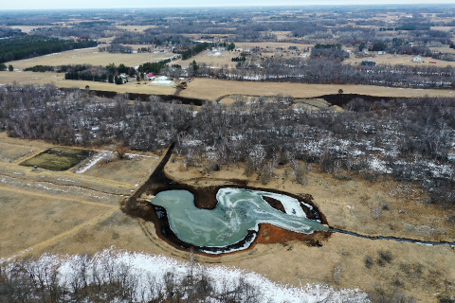
Vernal pools are shallow wetlands that fill with water in the spring and fall, then often dry out in the summer. They may appear like large puddles, but these depressions are brimming with life and help improve water quality. By capturing water from snowmelt and heavy rainfall, vernal pools reduce the amount of runoff (and therefore the contaminants it carries) reaching nearby surface waters and developed lands. This lowers flooding risks, improves water quality, and contributes to groundwater recharge as the trapped water slowly infiltrates through the soil. 

Photo: Example of a Vernal Pool

Vernal pools rarely contain fish because their water levels fluctuate dramatically. This creates a safe haven for many amphibians and aquatic invertebrates that would otherwise be heavily preyed upon. While some depend on vernal pools during only their vulnerable egg and larval stages, others spend their entire life within or near them. These small wetlands also provide food, water, and refuge for many other wildlife species such as ducks, turtles, and snakes. Benefits stem beyond the pool itself as several aquatic insect larvae transform to flying adults, serving as forage for insectivores like songbirds and bats.

Vernal pools are highly sensitive to environmental changes. Because they are nearly invisible for much of the summer, they can be easily missed and destroyed if the land is modified. You can help protect vernal pools on your property by noting their boundaries when visible in the spring and avoiding disturbance throughout the year. This is also a great time to explore the abundance of wildlife in and around these wetlands! For more information contact Breanna Keith, Water Resource Specialist, at This email address is being protected from spambots. You need JavaScript enabled to view it.

Additional Resources
"Spring-to-Life Ponds": an Illustrated Learning Guide, produced by the MNDNR
MN Frog ID and Calls and Common Vernal Pool Invertebrates, produced by the MPCA and the University of Wisconsin
Locating and Protecting Vernal Pools, produced by the MN Land Trust

  1002 Hits

Shoreline Restorations Coming to Sunrise Chain of Lakes

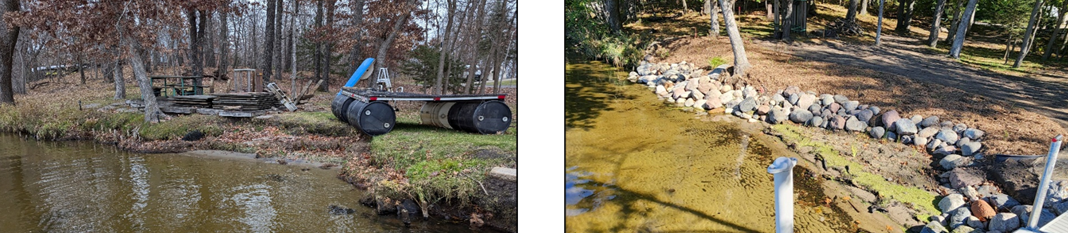
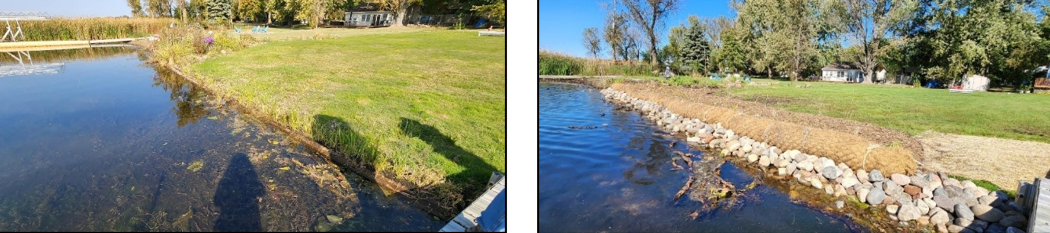
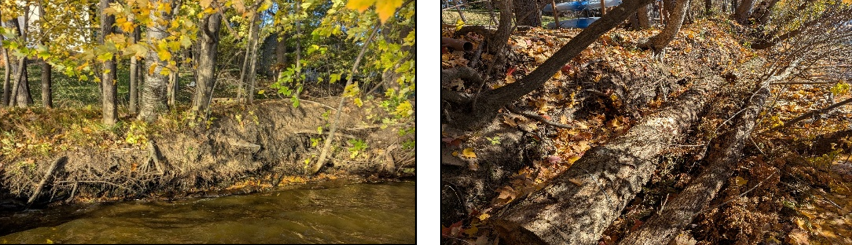
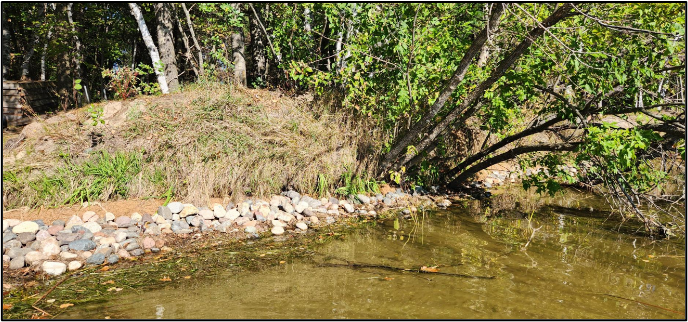
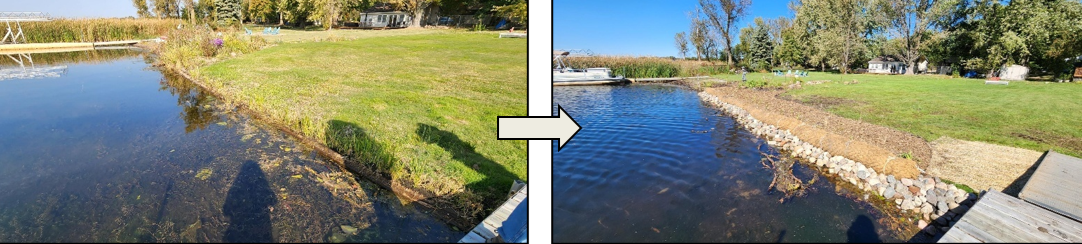
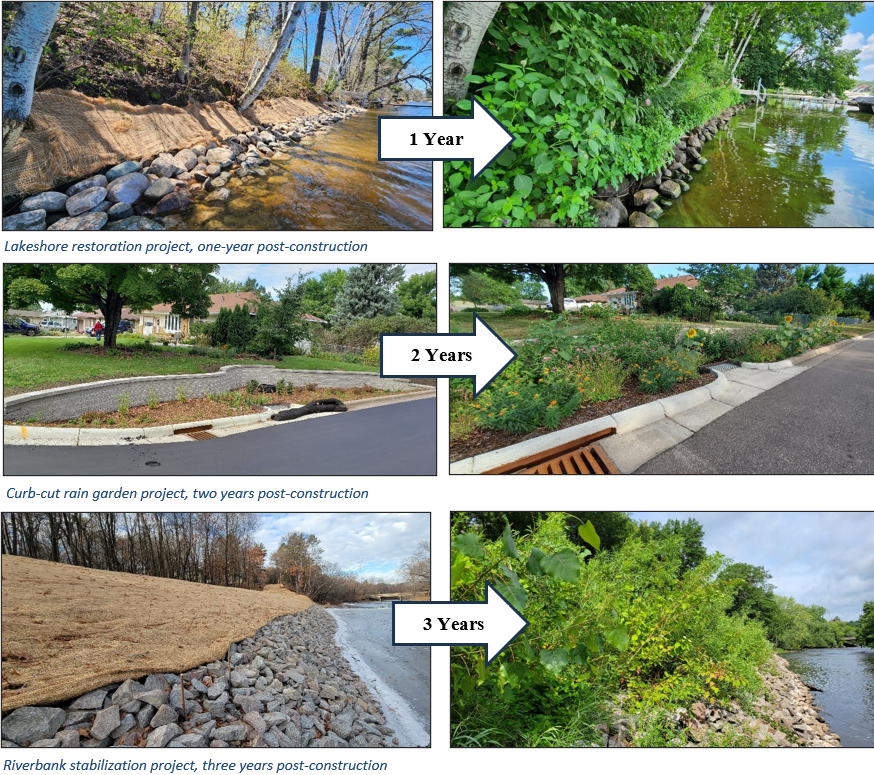
Designs have been completed and construction planning is underway for nine shoreline restorations on Martin, Coon, and Linwood lakes in Anoka County. Sites were selected based on the severity of erosion, and therefore the amount of nutrients and sediment they're contributing to the lake. A variety of 'bioengineering' approaches will be applied, utilizing natural materials such as vegetation, wood, coir logs, and rock to stabilize the shoreline while enhancing habitat for fish and wildlife. Funding is provided by a Clean Water Fund grant, the Sunrise River Watershed Management Organization, and landowner match. Stay tuned for more updates! For more information contact Breanna Keith, Water Resource Specialist, at This email address is being protected from spambots. You need JavaScript enabled to view it. 

  984 Hits

Emergent Vegetation Plays an Important Role in Lake Health

Emergent aquatic plants such as cattails, bulrushes, and sedges grow within the shallow margins, or "littoral zone", of most lakes in Minnesota. They improve water clarity as their roots stabilize the lakebed sediments and take in nutrients. Their stems and leaves provide habitat for fish, invertebrates, and amphibians below the water, refuge for waterfowl and other wildlife above the water, and protection for shorelines against the force of wave action. Emergent plants often grow alongside other aquatic vegetation, such as floating-leaf and submerged plants, creating a diverse habitat essential to lake health.

Any Destruction of Emergent Vegetation Requires a Permit in Minnesota

Lakeshore owners often wish to remove emergent vegetation to improve their access to open water and/or increase usable recreational space. Given its importance in improving water quality, providing habitat, and protecting shorelines from erosion, any  removal of aquatic emergent vegetation requires a permit from the Department of Natural Resources. This process connects landowners with professionals to ensure that the extent of vegetation removal (and methods used to achieve it) minimizes impacts to the lake and all who use it. Learn more about aquatic plant regulations HERE

Purple loosestrife is another common invader of shallow water.

Non-native emergent species such as narrow-leaf and hybrid cattails often grow in dense monocultures capable of outcompeting native species. Habitat quality and recreational usability are reduced as these invasions spread across large expanses of shallow water, but management efforts to remove them are often challenging and costly. When occurring in small clusters, these plants can still provide water quality benefits along disturbed shorelines where native emergent plants are absent. In either circumstance, removing a non-native or invasive emergent species requires a permit. 

Aquatic vegetation is a natural and essential part of lake and wetland environments. The abundance and types of plants present are primarily driven by water depth and clarity. Many lakes in the north metropolitan area are shallow (less than 15 ft. deep) or are more functionally open-water wetlands. These lakes usually contain abundant vegetation throughout when paired with good water quality, allowing sunlight to reach the bottom. The alternative is poor water quality from disturbances such as excessive nutrient inputs, reducing aquatic vegetation and the fish and wildlife that depend on it. Learn more about shallow lake vegetation from this StoryMap produced by the Rice Creek Watershed District: Aquatic Plants: Guardians of our Shallow Lakes.

For more information contact Breanna Keith, Water Resource Specialist, at This email address is being protected from spambots. You need JavaScript enabled to view it.

  2266 Hits

Improving Fish Habitat in the Rum River

ACD has grant funding available to enhance in-stream habitat in the Rum River! This effort focuses on areas adjacent to public land and those which are accessible for shore fishing. Rock vanes, woody overhangs, and similar features will be installed in areas where aquatic habitat structure is currently lacking to provide adequate holding and resting areas for game fish and the forage they rely on. This is part of a larger, corridor-scale river restoration effort supported by funding from the Outdoor Heritage Fund and several collaborating agencies. 

Photo: Existing high-quality habitat observed in northern Anoka County. The combination of rock and wood creates variation in structure and flow conditions, benefitting fish and their prey.

We are currently compiling a detailed inventory of existing conditions at several sites throughout Anoka, Isanti, and Mille Lacs Counties. Do you enjoy shore fishing along the Rum? Let us know which areas you think could use improvement! Share your feedback with Breanna Keith, Water Resource Specialist, at This email address is being protected from spambots. You need JavaScript enabled to view it.. 

  1497 Hits

Log Revetments Holding Lakeshore in Place

Photo: A log revetment installed on the NE side of Martin Lake.

Addressing eroding slopes along an undeveloped portion of the Martin Lake shoreline required a creative stabilization solution. Sandy soils, wave action (increasing with boat activity), and fluctuating water levels cumulatively drove soil loading to the lake and the gradual encroachment of the shoreline toward the adjacent road. However, site access and workable land upslope was limited, and preserving mature trees and other natural shoreline elements was a priority. To achieve this, sections of stacked logs were anchored to the base of the shoreline along critical eroding areas. 

Photo: Diagram by the Wisconsin Land and Water Conservation Association.

The lower logs act as a barrier to prevent waves from washing out soil at the base of the slope, and the upper logs trap the sandy soil falling from behind – rebuilding the eroded voids and creating a more stable slope within which vegetation can become re-established. At the same time, wildlife such as nesting turtles can still access these areas. ACD staff will continue monitoring this site in the coming years to assess its long-term effectiveness in protecting the shoreline. For more information contact Breanna Keith,Water Resource Specialist, at This email address is being protected from spambots. You need JavaScript enabled to view it..

  1673 Hits