The Oxbows of the Rum River

The Rum River in Isanti County


When allowed to wander freely, rivers flowing throughout a gently sloped landscape form a snakelike meandering path. This occurs as the fastest moving waters erode banks along the outer bends, and slower moving waters deposit sediment along the inner bends. Over many years, these processes cause the meanders to curve more intensely, causing the river to eventually loop back onto itself and cut a straight path through the narrow slice of land that remains. Now disconnected from the river, the C-shaped meander scar is called an oxbow.

To watch these processes in action, check out this video: Why Do Rivers Curve?

A quick glance at aerial imagery reveals numerous oxbow wetlands alongside the Rum River. They are rich in plant and animal life, serving as a "nursery" for fish, invertebrates, and amphibians in their early life stages while providing habitat for countless migratory bird species. These oxbows also improve water quality and reduce flooding by capturing water and the contaminants it carries following large storm events.

To learn more about the importance of oxbow wetlands and their utility in water resource management, read the Nature Conservancy's article on the topic here: What is an Oxbow? 

Aerial photos of a Rum River meander in Ramsey captured in 1991, 2003, and 2021 (left-right). Notice the increasingly thin sliver of land at the base of the curve, which eventually transitions to a river cut-through.
  2717 Hits

Native Plantings Added to Streambank Stabilization Sites

Image sourced from MNDNR Stream Habitat Program

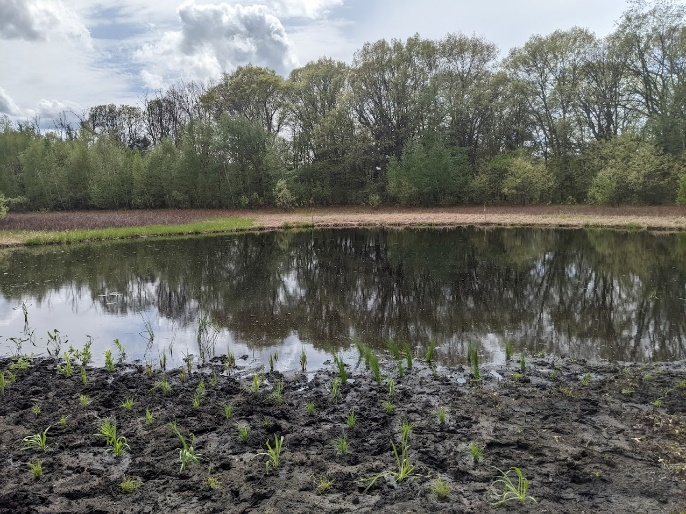
Last year, over 3,000 linear feet of cedar tree revetments were installed on the banks of the Rum River in Anoka County. While the cedar trees themselves will help capture sediment and prevent further erosion throughout the coming years, the re-establishment of native riparian vegetation is essential for promoting long-term bank resiliency. In May, ACD staff, with assistance from Anoka County Parks staff, planted a total of over 1,000 plants across six cedar revetment sites; species planted included sandbar willow, red osier dogwood, false indigo, and buttonbush (pictured below). 

When present, the deep roots of native trees, shrubs, grasses, and other vegetation act like a net, securing the bank's soils and preventing them from washing away. Streambank vegetation also provides essential habitat for many aquatic and terrestrial species. For these reasons, ACD incorporates native plantings into all streambank stabilization projects.

Images sourced from Minnesota Wildflowers. © Peter M. Dziuk
  2931 Hits

“Google River View”: 360° Photos Collected on the Rum and Mississippi

An actively eroding bank on the Rum River

Photos collected from near-shore zones on surface waters throughout the county serve as valuable tools for assessing lakeshore and riverbank conditions. Following a day in the boat with a 360° camera, these photos are uploaded to Google Street View, making them accessible to anyone. ACD then uses these them to compile erosion inventory reports, which describe erosion severity and stabilization project needs on high-priority waterbodies such as the Rum and Mississippi Rivers. Updated photos for these rivers were collected throughout the first week of May and are now available to view (alongside those captured in previous years) on Google Maps.  

While browsing through these photos, you are sure to see a beautiful river view. You may also notice banks currently experiencing noticeable erosion or, alternatively, portions that have recently been stabilized and planted with native vegetation.

A formerly failing riverbank at the Mississippi River Community Park in Anoka, stabilized and planted with native vegetation
  3658 Hits

April Showers Bring Vernal Pools

Vernal pools are shallow wooded wetlands that fill with water in the spring and fall, then dry out in the summer. They may simply look like a large muddy puddle, but in reality these small depressions are filled with life and benefit local water quality.

  • Water Resource Benefits

By capturing water from snowmelt and heavy rains, vernal pools reduce the amount of runoff – and the contaminants it carries – reaching nearby surface waters and developed lands. This lowers flooding risks, improves water quality, and contributes to groundwater recharge as the trapped water slowly infiltrates through the soil.

  • Aquatic Invertebrates and Amphibians

Vernal pools rarely contain fish because their water levels fluctuate dramatically. This provides a safe haven for many invertebrate and amphibian species that would otherwise be heavily predated upon. Many depend on vernal pools during their egg and larval stages, leaving for nearby aquatic and terrestrial habitats once fully developed. Others spend their entire life within or near the wetland's depression.

  • Birds, Reptiles, and Mammals

Due to their abundance of amphibians and invertebrates, vernal pools supplement the food and water needs of wildlife such as waterfowl, songbirds, turtles, snakes, bats, and even bears. These benefits stem beyond the vernal pool itself when many of the invertebrates transition from aquatic larvae to terrestrial adults, serving as forage for insectivore species.

Explore and Protect

Vernal pools are highly sensitive to changes in vegetation cover, climate, and local topography. Because they are nearly invisible for much of the summer, they can be easily missed and destroyed if the land is modified; even an unintentional pass through these depressions during an ATV ride can strongly impact their function. 

Seasonal wetlands like vernal pools are regulated under the Minnesota Wetland Conservation Act (WCA). You can prevent impacts to vernal pools on your property by marking their boundaries when visible in the spring and avoiding disturbance throughout the year. This is also a great time to explore the abundance of wildlife in and around these wetlands – an especially popular adventure for children.

Additional Resources

"Spring-to-Life Ponds": an Illustrated Learning Guide, produced by the MNDNR

MN Frog ID and Calls and Common Vernal Pool Invertebrates, produced by the MPCA and University of Wisconsin

Locating and Protecting Vernal Pools, produced by the MN Land Trust 

  3128 Hits

Where will this snow go?

As spring snowmelt and rainwater rushes down your street and into the nearest stormwater drain, you may contemplate its ultimate fate and journey along the way.

In a natural landscape, much of this water would evaporate or soak into the ground – destined to support vegetation or join the groundwater below – while the remainder would move downward along the surface to nearby wetlands, lakes, and streams. In developed landscapes, impermeable surfaces such as roofs and pavement prevent water from soaking into the ground while manmade drainage networks rapidly channel it to local waterways.

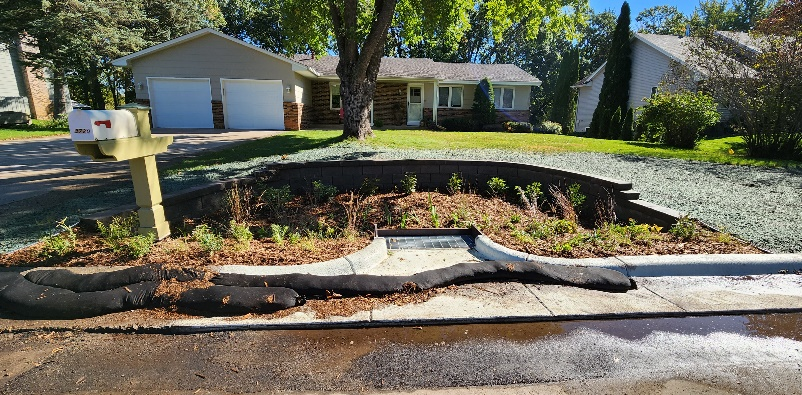
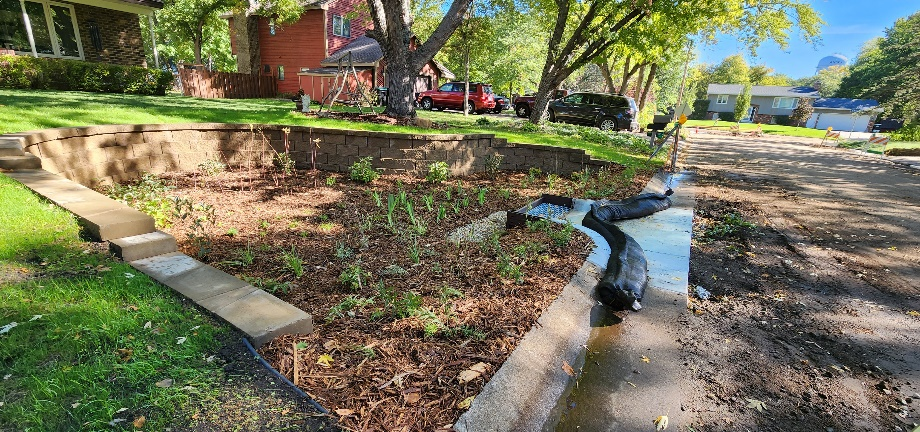
Anoka County contains many interconnected lakes, wetlands, streams, and rivers that receive and transport stormwater. Unfortunately, many of these have experienced increased pollution, erosion, and flooding as a result. Management practices such as rain gardens, bio-swales, and storm ponds have been established throughout the county to intercept stormwater pipes and ditches, decreasing the pollutant load and total amount of runoff entering our surface waters.

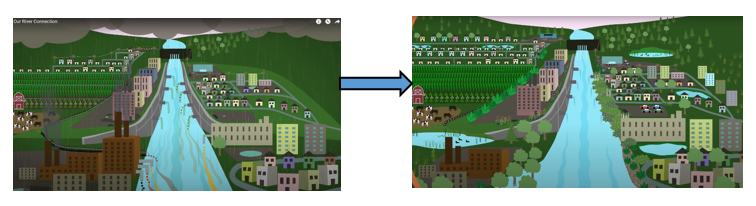
Ultimately, all of Anoka County drains into the Mississippi River – either directly from the land near its banks, or indirectly through its many tributaries (such as Coon, Cedar, and Rice Creeks, and the Sunrise, Rum, and St. Croix Rivers). The path that stormwater takes to these major rivers is unique to each neighborhood, city, and watershed; the figures below show examples of stormwater drainage scenarios common in Anoka County. 

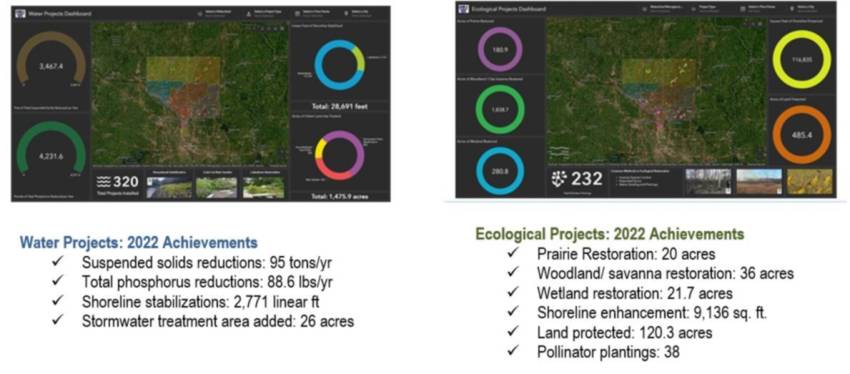
  ACD pursues a variety of projects that reduce the amount of untreated stormwater entering our waterways; learn more about these by viewing our interactive projects map here. You can also help reduce the amount of pollutants entering your neighborhood's stormwater by following the practices listed here.

  2415 Hits