Rum Riverbank Stabilization Completed at Riebe Park

ACD, in collaboration with the City of Princeton, completed a 300-foot riverbank stabilization in the city's popular Riebe Park. The project offers benefits to water quality, habitat, and new recreational opportunities. This segment of the Rum River had a severely eroding shoreline because of the erosive forces generated by the convergence of the main stem and the West Branches. 

Photo: Showing conditions of the Rum Riverbank, before and after construction.

The project involved grading the slope, installing root wads, constructing small rock weirs, and planting native vegetation. The floodplain bench on the new shoreline offers a "pressure relief valve" for floodwaters while also making the riverbank more walkable. The new habitat features are designed to protect the bank while also creating areas in the river that attract game fish. Funding for this project is provided by the City of Princeton and the Outdoor Heritage Fund under the Clean Water, Land, and Legacy Amendment.

Before the project, the riverbank was severely eroding and offered no meaningful habitat or public access. Post-project features a stable riverbank, in-stream habitat, and walkable terrain. Note: Tree planting to reforest the riverbank had not yet occurred at the time of these photos. For more information, contact Jamie Schurbon, Watershed Project Manager, at This email address is being protected from spambots. You need JavaScript enabled to view it.

  35 Hits

Tree Planting Grants Available for Landowners!

Photo: Two young boys, planting a tree.

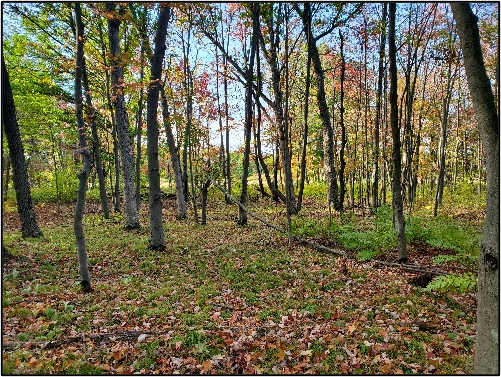
Financial assistance is available for landowners who wish to reforest their land. The Minnesota DNR's Field to Forest Program provides up to 75% reimbursement for tree planting expenses. Plus, a $500/acre incentive! The program requires planting a minimum of 3+ acres and is not intended for residential landscaping or planting in established forests. Contact your local DNR Forester by December 1, 2025, to apply. For more information about this program and others, please visit this link.

If that grant program isn't a fit but you'd still like to plant trees, ACD's annual tree is open. Trees are ordered now and picked up in the spring. All are seedlings, available in bundles of 10 for $24-$30 or bundles of 25 for under $46-$58. Prairie seed is also available. Please order early for the best selection; we intend to sell out of everything. Order online at www.AnokaSWCD.org

  172 Hits

Working to Ensure the Best Value in Construction

Anyone who has hired a contractor for a project knows you have a lot on the line. You need them to show up, bring the right tools, be knowledgeable, and navigate the inevitable unforeseen consequences. Tackling many construction projects every year, ACD uses a process that complies with the law, seeks out the best prices, and helps us find well-qualified contractors.

ACD often participates in an online competitive bidding process when planning larger construction projects. It's required by law for projects over $175,000. Somewhat recently, competitive bidding meant relying only on newspaper ads and receiving paper bids in sealed envelopes. Today, there are online tools that manage the process. Contractors can automatically receive notifications of nearby projects, download plan sets, and bid online. ACD can communicate with all interested contractors, including answering questions for the whole group. We can ensure everyone has the same information, keeping the playing field fair. 

Photo: 14 contractors attended a pre-bid meeting for the ACD’s Ditch 20 Wetland Restoration Project.

This type of competitive bidding can help bring out the lowest prices for publicly funded projects. On the whole, bids are usually not as close to each other as you'd think. As an example, a recent riverbank stabilization project received 12 bids ranging from $130,393 to $251,021. Government entities are usually directed to select the lowest responsible bidder. ACD takes extra steps to review the qualifications of the low bidder. We may set minimum qualifications and ask contractors to describe their experience, equipment, and expertise. Performance on past projects for ACD and/or its partners is also considered. 

  195 Hits

Invasive Cattail Research Highlighted at Coon Lake

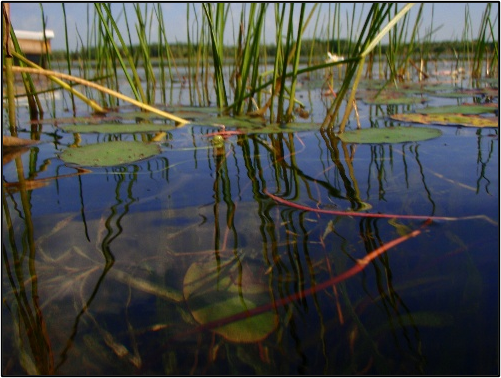
Coon Lake, Anoka County's largest lake, was chosen as a research site for invasive cattails by the Minnesota Aquatic Invasive Species Research Center (MAISRC), associated with the University of Minnesota. Residents and natural resource professionals (including ACD staff) were among the ~50 people in attendance in August when their research was shared. MAISRC wants to know whether small-scale mechanical cattail removal can enhance fish habitat, the overall impacts that invasive cattails have on the environment, and the potential benefits of specific management approaches. They have research sites at nine lakes across the state, where they are comparing areas with invasive cattails present to those with cattails removed. Generally, they've found that native, aquatic vegetation becomes established quickly where cattails are removed. They also found healthy responses from fish and improved dissolved oxygen concentrations. 

Photo: Participants viewed the Coon Lake cattail research plots from four pontoon boats.

Minnesota is home to both native and non-native cattails, with the latter arriving in the 1940s, if not earlier. However, a hybrid species of the two types of cattails has become the most common and is the most aggressive. The hybrid species creates dense stands, consuming large areas of lake and wetland edges. Eradication is not a possibility and is why management approaches are being researched. Dr. Amy Schrank and her colleagues showed their cattail clearing methods and fish sampling equipment. The cattail removal areas are ~15-foot wide strips. Dr. Schrank emphasized that cattail removal is not being explored just because they can be a nuisance to landowners, but as part of management to improve the health of the fishery and the overall health of the lake.

More information about the research is at www.maisrc.umn.edu/cattails. In Minnesota, a DNR permit is required to destroy or control emergent vegetation, like cattails, in public waters. For more information, see the MNDNR webpage or contact Jamie Shurbon, Watershed Projects Manager, at This email address is being protected from spambots. You need JavaScript enabled to view it.

  609 Hits

Rain Garden Construction Completed for Coon Lake

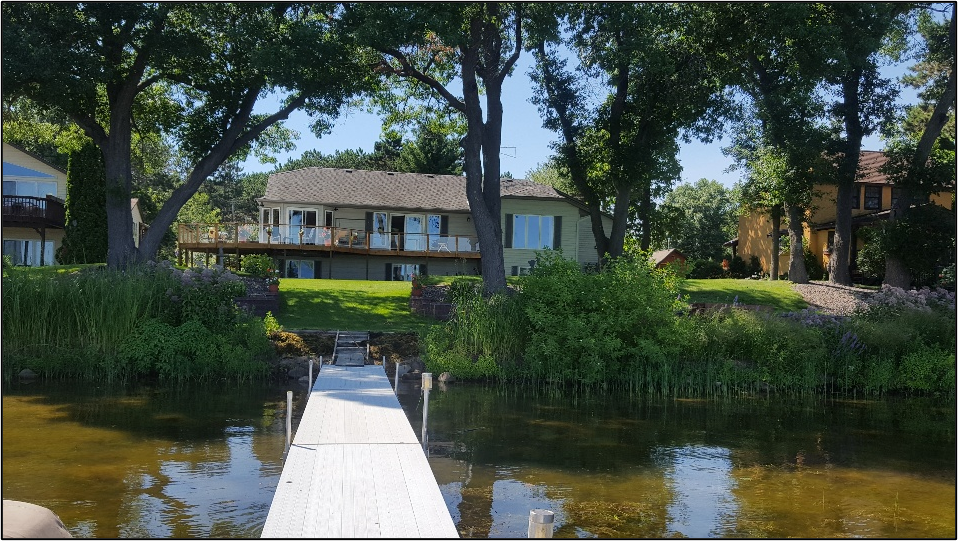
A rain garden was recently completed to benefit water quality in Coon Lake. This is the third rain garden in that neighborhood, each treating stormwater from a different section of the street. Previously, all curbside runoff was piped to the lake. This project was a collaboration between the Sunrise River Watershed Management Organization, ACD, and the landowner. Funding was from a grant from the Clean Water, Land, and Legacy Amendment. 

  884 Hits