





Pet Micro-chipping Technology In Carp!

Owners of loved and valuable pets sometimes have a microchip implanted to help recover them if they are lost or stolen. The same technology is now being used to help the Anoka Conservation District remove destructive carp from lakes.

We recently added microchip PIT tags to 187 carp in Typo Lake (Linwood Township). Those carp are now telling us when and proportionately how many carp are visiting baiting stations in the lake. An underwater sensor detects the carp when they are near the bait. A floating, solar-powered control unit uploads that data to the internet. This allows us to spring the nets around the bait at times that are likely to catch the most carp.

Graph: Number of PIT tagged carp visiting baited net stations over 7 days. Note the increase over time and the peak just after midnight. 

  3054 Hits

I Used to Mow There … and Now it’s Gone

"See that tree. I used to mow two passes between that tree and the shoreline. Now the tree is in the water." It's a common observation we hear from shoreland landowners. The erosion itself is slow enough that we can't see it immediately. But over time it becomes clear that erosion was happening all along. One measure of land lost is recalling how we used to use an area.

It's striking that the most common measure of erosion is "where we used to mow." Perhaps, it's part of the cause. As a general rule, many grasses have roots as deep as the plant is tall. That means mowed turf has 1-2" deep roots that afford little erosion protection.

As a simple way to slow shoreline erosion, consider an unmowed buffer at the water's edge. It's understood that this may not be feasible in dock, beach, or other active use areas. But in other areas, just let it grow or intentionally plant it with desirable native vegetation. ACD staff can help. Just give us a call.

  2793 Hits

Linwood Lakers Trying Out Native Shoreline Plants

"Try it, and you'll like it. The first one's free." A free trial can be just what's needed to break through to new customers. At this year's Linwood Lake Improvement Association annual picnic, the Anoka Conservation District distributed nearly 100 native shoreline plants to be planted all around the lake at around 20 different properties.

Native plants can mean "weeds" to some folks. Or just out of the comfort zone. But the right plant in the right place is beautiful and effective. On shorelines there are a variety of native plants that are the perfect choice –beautiful, strong, and well-adapted to the wet. Good habitat too. They're key to a stable shore and healthy lake.

Thanks to Prairie Restorations, Inc who provided the giveaway plants. ACD offers technical help and grants for those wanting to do a larger shore stabilization or buffer project. 

  2996 Hits

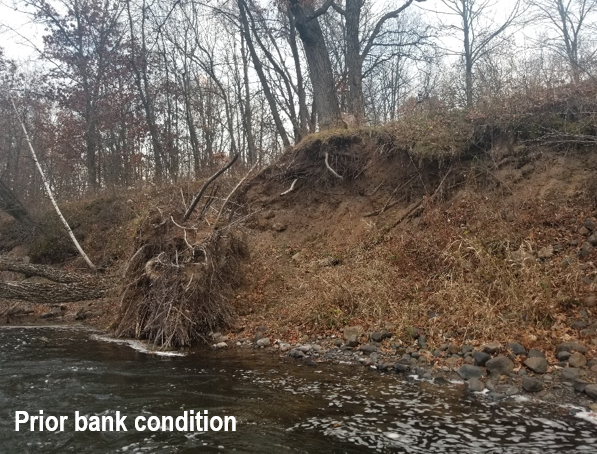
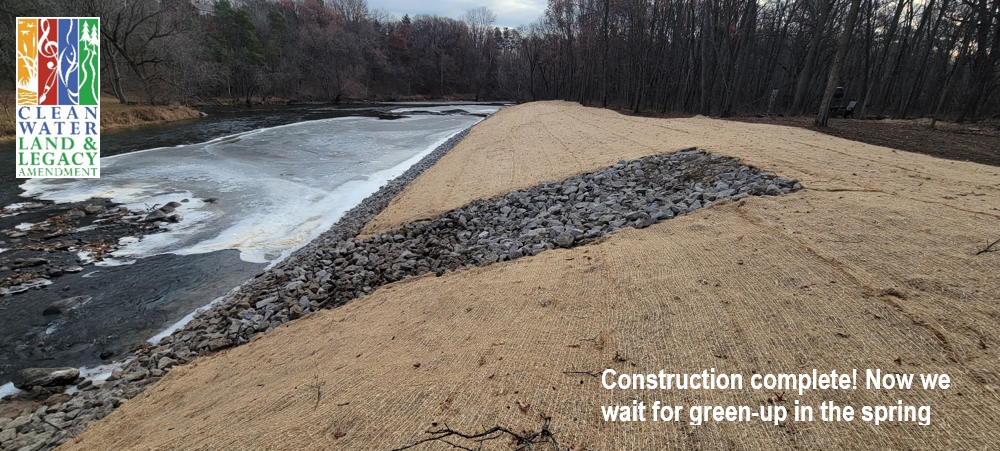
Riverbank Stabilization Project Construction to Begin in Mississippi River Community Park

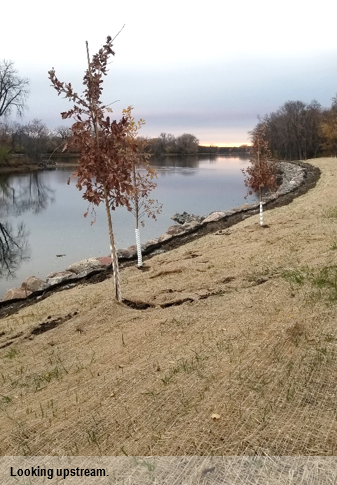
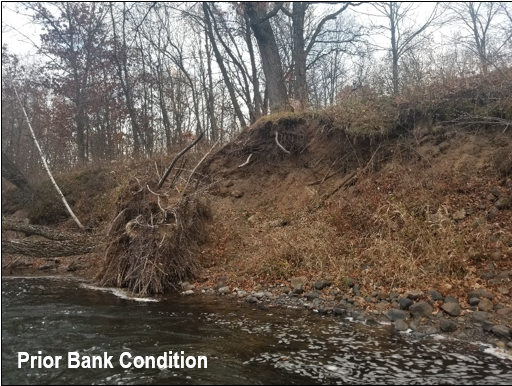
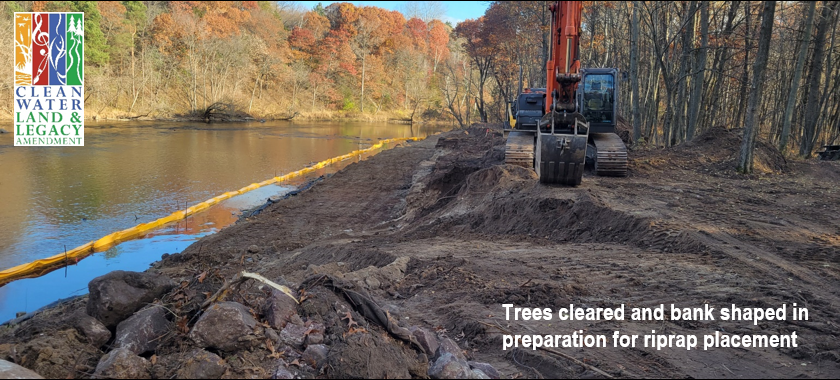
The riverbank stabilization project in Mississippi River Community Park will begin this month. The current schedule forecasts project completion in early October and includes the general process outlined below.

  • Clearing and grubbing – Existing vegetation will be removed within areas that will be regraded to achieve a stable slope.
  • Erosion control – Protections will be put in place to prevent exposed soil from leaving the site during construction.
  • Excavation and riprap placement – This is the primary step in the stabilization process. The steep slopes will be regraded, and riprap will be placed at the bottom of the slope within the zone of frequent water level fluctuation.
  • Planting – The regraded slope above the riprap will be stabilized with native vegetation. Seed mixes, plant plugs, shrubs, and trees will all be planted.

The project is funded by a Clean Water Fund grant, a Watershed Based Funding grant, and match from the City of Anoka. Watch for more updates from ACD and the City of Anoka as the project progresses.

  3214 Hits

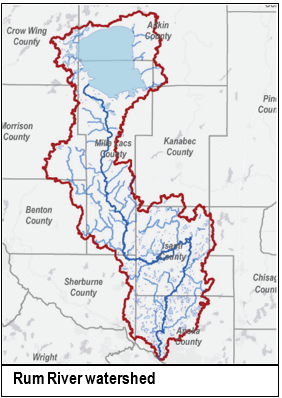
Chloride Trends in the Rum River Watershed

The Metropolitan Council (MCES) put out a report on the trends of chloride in the Rum River Watershed. This report was based on data collected from 2001 to 2019 by both the MCES and Anoka Conservation District. Chloride concentrations have been rapidly rising in many waterbodies, including shallow aquifers, throughout Minnesota. This is a worrying trend because chloride is a permanent water pollutant that is toxic to fish, aquatic bugs, and amphibians. The main sources of chloride pollution in Minnesota comes from livestock excreta, household water softening, synthetic fertilizer, and de-icing salt. Chloride concentrations can be greatly affected by other factors like season, precipitation, and streamflow. During the winter months, concentrations rise with the use of approximately 400,000 tons of de-icing salt on Twin Cities' roads. Precipitation and streamflow also affect the concentration by dilution during high flow and precipitation years and concentration during low flow and precipitation years.

Luckily, the MCES found that concentrations of chloride are generally low in the Rum River. Chloride was increasing from 2001 to 2012 but has remained stable since 2012. Although this is a good sign, climate change is creating a wetter, warmer climate in Minnesota. This will greatly affect the freeze-thaw cycle and will have an unpredictable affect on pollution dynamics. Understanding how pollutants like chloride can affect Minnesota's waterways is an important step in keeping our waterways clean.
  2755 Hits

Coon Lake Lakeshore Restoration – One Year Later

One year ago, ACD partnered with the Sunrise River WMO and a homeowner on Coon Lake to restore a damaged and degraded shoreline to improve water quality and lakeshore habitat, as well as promote native plant diversity and pollinator habitat. The shoreline was degraded by waves and ice, mowing of turf grass to the water's edge, and further damaged by tunneling muskrats. To correct these issues, the shoreline was regraded to a more gentle approach to the water, a muskrat deterrent was buried along the shoreline, and turf grass was replaced with native plants ranging from aquatic-emergent at the water's edge, to upland plants further up the bank.

The project was installed in July of 2020, and despite the recent drought, has flourished after one year of growth. Creating a diverse, native lakeshore can often be as simple as no longer mowing turf grass near the water's edge and planting native shoreline plants to create a more natural buffer area. The Anoka Conservation District can offer technical assistance to any landowner interested in creating a more beneficial shoreline, and oftentimes can bring financial assistance to a project as well. 

  3335 Hits

Restoring Hydrology and Wetland Habitat at Cedar Creek Conservation Area

The Anoka Conservation District, US Fish and Wildlife Service, and Anoka County Parks are collaborating to restore hydrology and enhance five acres of wetland and one acre of upland prairie at Anoka County Park's Cedar Creek Conservation Area. Two wetland basins were enhanced by installing sheet piling ditch plugs and adding fill material in a private ditch that was draining the wetlands. A berm to prevent water from entering the ditch was constructed to enhance a third wetland basin. Non-native reed canary grass biomass and root sod was scraped from these wetland basins and used to fill the ditch. Construction is complete and vegetation management will occur on these three basins and two additional basins in the area for the next five years using funds from the Lessard-Sams Outdoor Heritage Council. The goal is to convert these once drained wetlands that were dominated by reed canary grass to wetlands with native vegetation and greater water holding capacity. This will provide benefits to water quality and improve wildlife habitat.

  4137 Hits

Long Term Success of Cedar Tree Revetment Projects in Anoka County

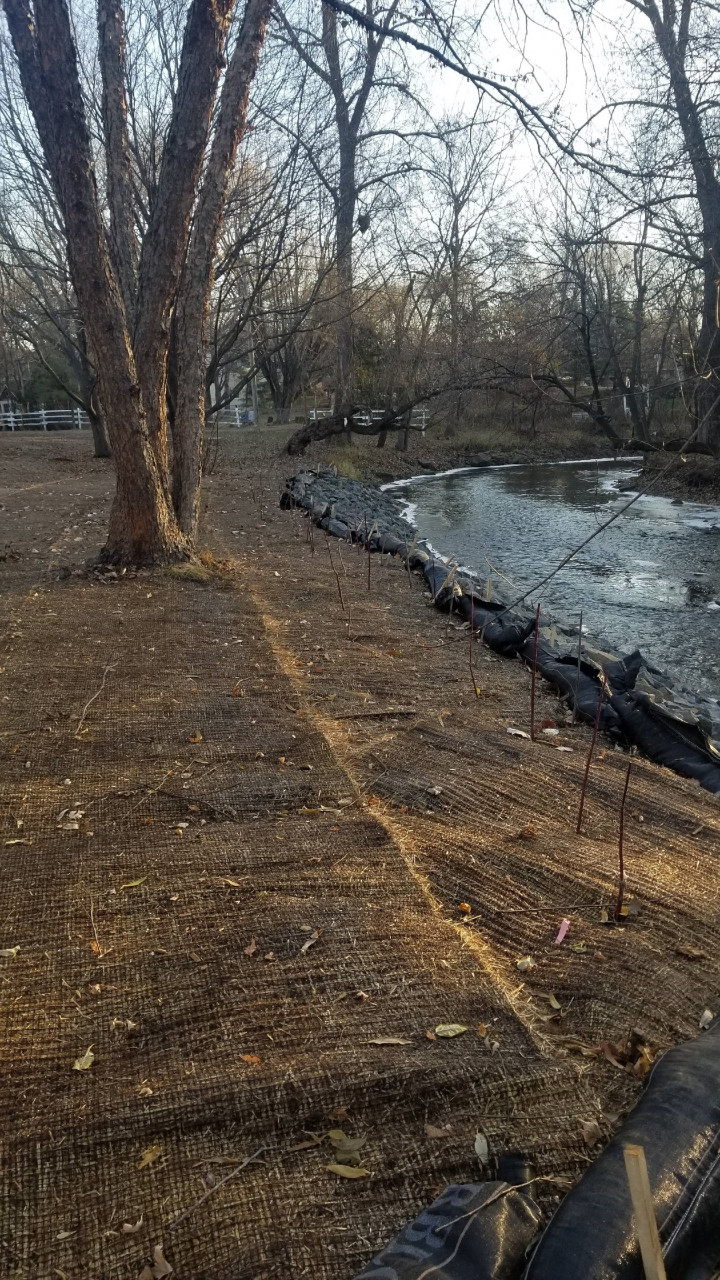
Cedar tree revetments are a cost-effective bioengineering practice that can be used to stabilize actively eroding riverbanks. This spring, staff from the Army Corps of Engineers (USACE) visited several cedar revetment projects that ACD had installed between 2002 and 2016. The two staff from the USACE had been traveling to several states to review what is working and what is not working when it comes to cedar revetment projects. They are hoping to use the information to publish technical notes and/or peer reviewed literature.

They were very impressed by the effectiveness of ACD's revetments, even the very old ones. They attribute this effectiveness to the removal of the back branches. They had not seen this technique in any other state they had visited. Most cedar revetment failures studied, seemed to come from the trees moving/floating during high water and scour behind the trees causing more erosion. They also saw many trees that snapped in half, which was potentially from the stress of so much movement. They are planning to highlight the technique of removing the back branches in any published literature.

Almost all of ACD's revetments visited were still in place. Most had stopped, or greatly decreased erosion at the toe but did not fill in with sediment. The most common failure was broken wire that held the tree to the duckbill anchor. In most of these cases, the trees did not move a lot from where they were originally placed. The breakage seemed to be caused by rust.

  3578 Hits

Rum River Cedar Tree Revetments

The Anoka Conservation District has been working hard in partnership with Conservation Corp of MN and the Anoka County Parks Department to implement Cedar Revetments along the Rum River. So far nearly 1,500 linear feet along the Rum has been protected using the bio-engineered practice. These practices have been installed on private lands as well as property managed by Anoka County Parks. This type of practice is effective at protecting the bank from erosion while also enhancing shoreline habitat for wildlife. Cedar revetments are also much less expensive compared to other stabilization techniques. Through a state grant awarded to Anoka County Parks, there is currently funding available to cover 90% of the total project cost.

If you own property on the Rum River and are interested in protecting your shoreline, please contact Kris Larson for more information. 763-434-2030 x110, This email address is being protected from spambots. You need JavaScript enabled to view it..

  3217 Hits

Rain Gardens for Rice Creek

Street reconstruction projects often provide opportunities to install new projects that can benefit water quality in nearby waterbodies. In the City of Fridley, up to six curb-cut rain gardens are currently being designed in conjunction with a street reconstruction project. The designs are being done by ACD in partnership with the City of Fridley, the Rice Creek Watershed District, and landowners. The rain gardens will capture stormwater runoff before it enters the storm sewer system, which discharges to Rice Creek.

Depending on the underlying soils at each site, rain gardens with sandy soils will use infiltration (i.e. the water will soak into the ground) while those with finer soils (e.g. silty soils) will filter the runoff before discharging the cleaner water to the storm sewer system. In both cases, Rice Creek will benefit from reduced loading of sediment and nutrients.

High priority properties with large contributing drainage areas were targeted. Those properties with landowners willing to transition some yard space out near the road from turf grass to garden area and agree to provide maintenance are being considered for rain garden installation. Funding will be provided by the City of Fridley and the Rice Creek Watershed District.

Watch for additional updates as designs are finalized and the rain gardens are installed. To see other rain gardens already installed throughout Anoka County, please see the virtual project tour on ACD's website.

  2829 Hits

Please Water Responsibly

This summer has been very dry. As a result, many cities around the metro have implemented watering bans or restrictions. Watering daily during drought conditions puts further strain on water supplies than the drought is already causing. Watering allowance during restrictions (e.g. odd or even days only) should be thought of as the MAXIMUM you should water, not the minimum. If your grass is green and lush, consider shutting your sprinklers down for a day or two. Selectively water areas of your yard that may be sunnier or drier where the grass browns more readily, but consider skipping areas that stay green longer. In times like these, it becomes even more important that we share our limited water resources responsibly.

Use these additional tips to conserve water this summer:

  1. Use sprinklers efficiently. Align sprinklers to avoid irrigating roads, sidewalks, and driveways. Install a rain sensor on automated irrigation systems.
  2. Water deeply and less frequently rather than daily. The only exception to this is when you start seeds which require moisture for germination. When plants are watered less frequently they grow deeper roots and become healthier plants.
  3. Water in the morning. Watering in the morning prevents water loss from evaporation and also prevents possible fungal problems if plants remain wet in the cooler night.
  4. Mulch your garden beds with wood chips, leaves and unsprayed straw. Mulching around the plants in your garden will help conserve soil moisture.
  5. Add organic matter. Adding a layer of compost to your beds every season will increase the water holding capacity of your soil.
  6. Install a rain barrel. Harvest water from rooftops during rainstorms and use that water to water gardens.
  2718 Hits

New Grants Secured in Northeast Anoka County

This spring, long time Martin Lake residents Wally and Nancy Olson challenged the other members of their lake associations: donate $3,000 for lake water quality improvement and we'll match it. In just a few weeks $3,600 in donations poured in, including 21 households that donated $100 or more. Total funds raised was $6,600. This followed a similar challenge and response in 2020.

The funds will go into the lake association's Water Quality Fund. In the past, this money has been used for a variety of projects including rain gardens, stormwater ponds, carp management, and aquatic invasive species prevention. In nearly every case the lake association and its partners have used the funds as match for grants, multiplying their cash by 4x to 10x.

Some of the money raised by the Martin Lakers is being used as matching funds toward a new grant secured from the Anoka County Aquatic Invasive Species Prevention Program for radio tagging carp. Linwood, Typo, and Martin Lake are each receiving $3,000 for carp management from the AIS Prevention Program. The lakes are part of a chain of lakes with active carp management led by the Anoka Conservation District. Carp are being removed where they are abundant, and harmful to water quality and habitat.

Along with matching funds from the Martin Lakers, the grants were supported by $750 in matching funds from the Linwood Lake Improvement Association and Sunrise River Watershed Management Organization.

  2978 Hits

Staff Spotlight: Jamie Schurbon

Jamie Schurbon, ACD's Watershed Projects Manager, has lived a rich and varied life. He grew up in rural Iowa, earning his bachelor's degree from Iowa State University before moving to South Carolina to complete his Master's in Environmental Biology. He spent that time studying reptiles and amphibians in and around the Hell Hole Swamp. After school, he held a variety of short term natural resources jobs that took him from the mangroves of the Florida Keys, to the South Dakota Badlands, to coastal barrier islands. Ultimately, he decided to return to the Midwest and started his first full time position as a technician at the Anoka Conservation District.

Because of his diverse experiences with different environments, it makes sense that instead of a single favorite place in Minnesota, Jamie enjoys the variety, including the Boundary Waters lakes, southeast Minnesota trout streams, northern forests, and prairies. Locally, he especially enjoys spending time on and around the Rum River for its good fishing, quality habitat, and because it is a scenic and quiet getaway.

In his time away from work, Jamie enjoys coaching youth baseball, teaching confirmation classes at his church, playing softball, and working on home improvement projects. Some recent projects have included a kitchen renovation and a canoe rack. Jamie never finds himself short of new projects as one project always seems to turn into another. The old copper plumbing from a kitchen remodel, for example, was then crafted into jewelry.

Jamie indulges his love of the outdoors through hunting and fishing and is also a member of a few sporting organizations including the Isanti County Sportsman's Club, where outdoor enthusiasts both promote conservation and enjoy outdoor activities. Jamie, along with his wife and two sons (ages 11 and 14), have even raised ducks every summer for the last four years.

When asked to share a memorable story of local conservation efforts, Jamie had this to say:

"During my 20 years at ACD I've especially learned a lot from the "old timers" who grew up in the area. I find that today's conservation efforts are not all that different from the past, and these efforts do make a difference. For example, Andover resident, WWII veteran, and former teacher Lyle Bradley once described to me how he flew up and down the Rum River corridor to identify feedlots and dumps on the shoreline. The cleanup that followed made a difference and is a testament to what a committed person can do!"

To contact Jamie, reach out to This email address is being protected from spambots. You need JavaScript enabled to view it. or (763) 434-2030 x210

  2866 Hits

Linwood Elementary School Rain and Pollinator Garden

Turning a problem into a solution with the Linwood Elementary School rain and pollinator garden.

Construction and expansion took place recently at Linwood Elementary School resulting in a larger roof capturing and sending more rain water to an area in front of the school. This small area is surrounded by the building on two sides, the front sidewalk, and the sidewalk to the main entrance. The additional water produced a large deep puddle for several days and a mud pit after water finally infiltrated. There was a need to improve that area for safety and aesthetics especially since it is in front of the school entrance. The solution: a rain and pollinator garden.

The depressed basin provides a micro example of different hydrologic zones and plant communities ranging from upland plants on the perimeter of the area and wetland plants down in the basin. Parent volunteer, Jennifer Braido took the lead to help facilitate and three 4th grade classes learned about rain gardens so they could create a design for the rain and pollinator garden. ACD staff and Jennifer taught 4th graders about hydrologic zones, plant communities, wetland indicator status, plant adaptations including aerenchyma tissue in wetland plant roots and plant's seasonal bloom times. With all this information, the classes choose their favorite plants for different zones of the garden and did some math to determine how many plants they needed. Another parent volunteer, Robb Johnson, and ACD staff worked to increase water storage capacity by installing a French drain which has reduced the time of standing water after a large rainfall. Finally, the 4th graders were out planting their rain-pollinator garden with the upland species along the edges and the wetland species down in the basin. While they were planting, a monarch butterfly fluttered around appreciating this new habitat. An educational sign is posted to highlight the benefits of rain and pollinator gardens to all that pass by the main entrance to Linwood Elementary School.

  3035 Hits

ACD Staffer Appointed By Governor to Water Advisory Committee

The Anoka Conservation District's Watershed Projects Manager, Jamie Schurbon, has been reappointed by Governor Tim Walz to the Metropolitan Water Supply Advisory Committee (MAWSAC). He was first appointed in 2012 by Governor Dayton. The committee advises the Metropolitan Council on regional water supply management. Topics addressed include groundwater contamination, protecting the Mississippi River as a drinking water source, water infrastructure, and water supply.

The committee represents diverse interests, with Schurbon as the only member from a local natural resources agency. Other members include public water supply managers, county commissioners, and state agency experts on health, pollution, and agriculture. Anoka County Board Chair Scott Schulte noted the need for balanced perspectives in his recommendation of Schurbon, noting Jamie "has an understanding of the need for both natural resources and community growth to support quality of life in Anoka County."

"I appreciate being part of regional efforts," noted Schurbon. "It's impossible to manage most water issues within one city or county. Groundwater, water supply pipes, and waterways all connect across communities."
  2865 Hits